
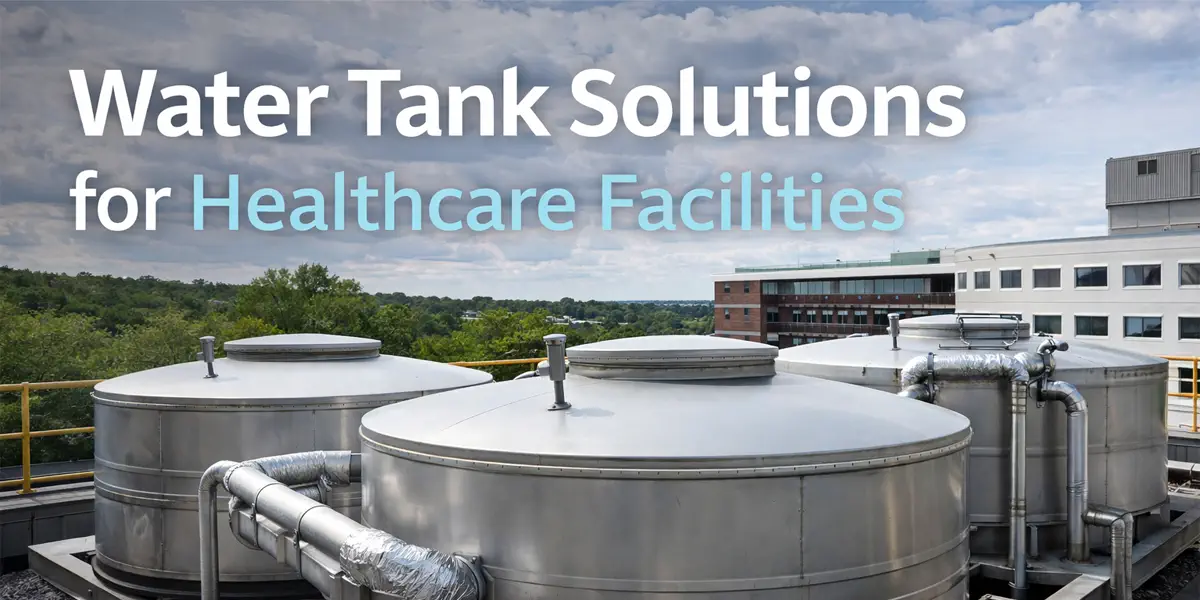
Water Tank Solutions for Healthcare Facilities (Hospitals, Clinics)
Healthcare facilities depend on safe, reliable water storage every day. Hospitals, clinics, and medical centres use water not only for drinking but also for hygiene, cleaning, clinical processes, and fire protection. Because of this, water tanks in healthcare settings face far stricter expectations than those in many other sectors.
Choosing the right tank solutions and maintaining them correctly plays a critical role in patient safety, staff welfare, and regulatory compliance.
Why Healthcare Water Storage Is High Risk
Healthcare environments bring together vulnerable patients, complex plumbing systems, and high water demand. If water quality declines, the consequences can be serious. Poorly maintained tanks can encourage stagnation, sediment build up, and bacterial growth, including organisms that pose a heightened risk in clinical settings.
Many healthcare buildings also operate around the clock. This makes shutdowns disruptive and costly, which means water tank solutions must be reliable, long lasting, and designed to minimise unplanned downtime.
Common Challenges in Hospitals and Clinics
Healthcare facilities often rely on older infrastructure. Tanks may be oversized, poorly insulated, or difficult to access for inspection and cleaning. In some cases, access restrictions lead to delayed maintenance, increasing long term risk.
Temperature control is another challenge. Hot and cold water systems must remain within safe operating ranges to reduce bacterial growth. Poor insulation or degraded tank linings can compromise these controls, especially during seasonal temperature changes.
Space constraints are also common. Tanks may be located in roof voids or plant rooms with limited access, making replacement impractical without major building work.
Effective Tank Solutions for Healthcare Settings
Tank relining is often an ideal solution for hospitals and clinics. Relining restores the internal surface of a tank without the disruption of full replacement. Modern lining systems create smooth, hygienic surfaces that resist corrosion and microbial attachment, helping protect water quality over time.
Remote inspection technologies, such as ROV inspections, allow tanks to be assessed with minimal system downtime. This is particularly valuable in healthcare environments where continuous water availability is essential.
Upgraded lids, vents, and insulation also play an important role. Secure, sealed lids reduce the risk of contamination, while insulated tanks help maintain stable water temperatures and reduce energy loss.
Compliance and Ongoing Management
Healthcare facilities are subject to strict guidance around water safety and infection control. Regular inspection, cleaning, and maintenance are essential to demonstrate compliance and reduce risk.
A proactive maintenance strategy helps estates teams identify issues early and plan remedial work around clinical schedules. This approach avoids emergency repairs and supports consistent water quality across the site.
Supporting Patient Safety Through Smart Tank Management
Water tanks are often out of sight, but they should never be out of mind. In healthcare settings, tank condition directly affects patient safety, operational resilience, and regulatory confidence.
By investing in appropriate tank solutions and ongoing maintenance, healthcare providers can protect water quality, reduce long term costs, and ensure their facilities continue to operate safely and efficiently.
At ES Water Solutions, experience in healthcare environments means tank systems can be upgraded, inspected, and maintained with minimal disruption and maximum reliability. If you are a healthcare facility and would like to know more, then please get in touch.