
Why Surface Preparation in Water Tank Relining Matters
Surface preparation in water tank relining is the most critical stage of any successful tank refurbishment project. While many people focus on the final coating, the durability and performance of a relined tank depend heavily on how well the internal surfaces are prepared before application begins.
Understanding why preparation matters helps building owners and facilities managers make informed decisions when planning water tank refurbishment.
What Is Surface Preparation in Water Tank Relining and Why Does It Matter?
Surface preparation involves cleaning, repairing, and conditioning the internal surfaces of a tank before the protective lining is installed. This stage removes corrosion, biofilm, scale, and any loose material that could prevent proper adhesion.
Without thorough preparation, even the highest quality lining system can fail.
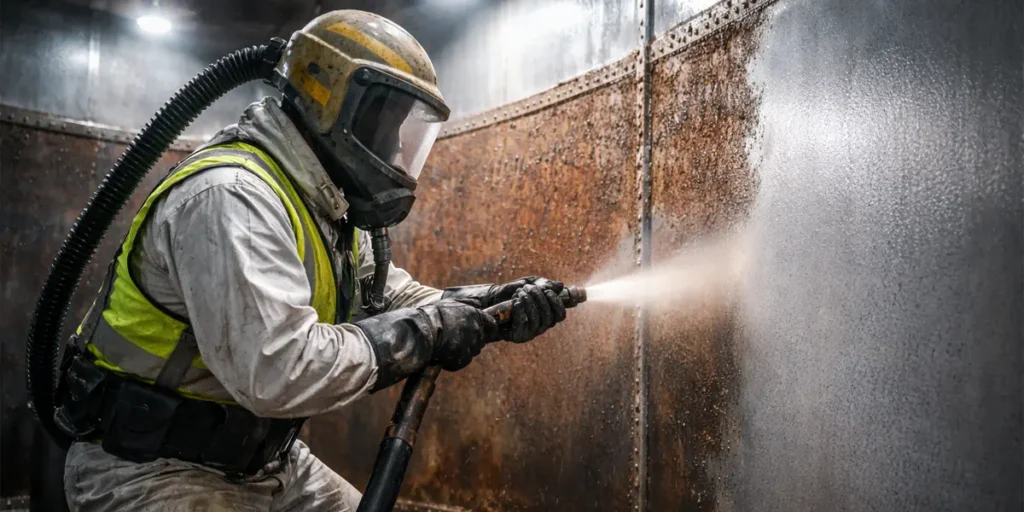
In steel tanks, this often includes abrasive blasting to remove rust and expose clean metal. In concrete tanks, preparation may involve mechanical grinding and crack repair. GRP tanks require careful cleaning and surface conditioning to ensure compatibility with the new coating.
Each tank material demands a tailored approach.
Why Adhesion Is Critical in Surface Preparation for Water Tank Relining
The durability of water tank relining depends on how well the new lining bonds to the existing surface. Poor adhesion leads to blistering, peeling, and eventual coating breakdown.
When temperatures fluctuate or water levels change, the tank structure expands and contracts. If the lining has not bonded correctly, these movements can cause separation from the substrate.
Professional preparation ensures the surface profile is correct, dry, and contaminant free before lining begins. This creates a strong mechanical and chemical bond that supports long term performance.
The Risk of Cutting Corners
Surface preparation is the most labour intensive part of water tank relining. It requires specialist equipment, confined space procedures, and experienced technicians.
When contractors rush this stage, problems often appear within months. Small air pockets or unseen corrosion can develop into coating failure, leading to further downtime and additional costs.
Thorough preparation reduces the risk of early defects and extends the lifespan of the relined tank.
Hygiene and Compliance Benefits
Water tanks must meet strict hygiene standards. Guidance from the Health and Safety Executive outlines the importance of maintaining clean and properly maintained water storage systems to reduce risk. Any remaining debris, corrosion, or biological contamination beneath a lining can compromise water quality.
Proper surface preparation removes biofilm and contaminants before the new lining seals the internal surface. This supports compliance with water hygiene regulations and reduces ongoing maintenance issues.
A smooth, well prepared surface also makes future inspections and cleaning more straightforward.
Long Term Value from Professional Relining
When clients focus only on the final coating, they may overlook the importance of preparation. However, the success of water tank relining relies heavily on what happens behind the scenes.
Investing in professional surface preparation ensures:
-
Strong lining adhesion
-
Reduced risk of blistering or peeling
-
Improved hygiene standards
-
Extended service life
At ES Water Solutions, we treat surface preparation as the foundation of every relining project. By prioritising precision and attention to detail, we help clients achieve durable, compliant, and cost effective water tank relining that stands the test of time.
One Response