
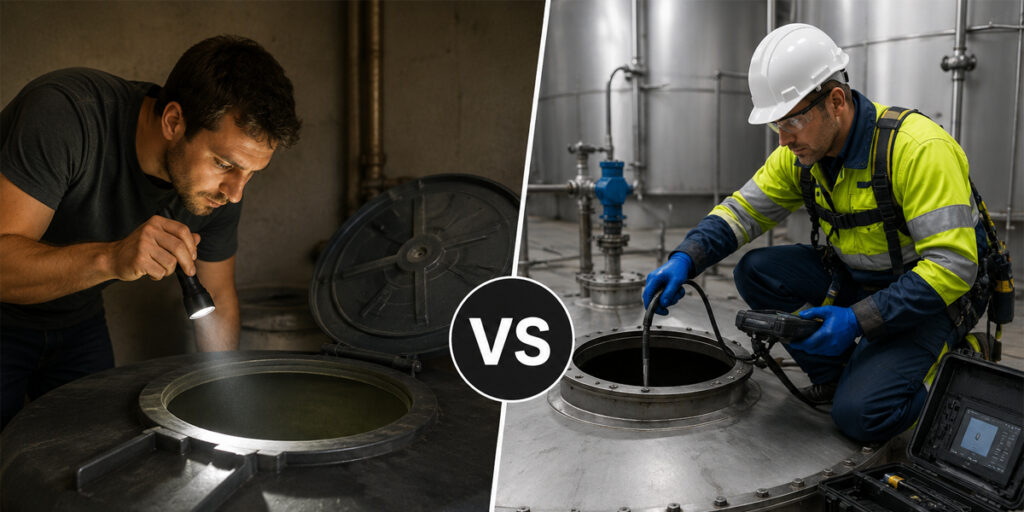
DIY Water Tank Checks vs When to Call a Professional
A quick visual check on your water tank costs nothing. A professional inspection costs more, but it can save you a lot more down the line. Knowing which DIY water tank checks are safe to carry out yourself, and when to call in an expert, makes all the difference.
Not every issue needs a specialist straight away. But some warning signs should never be left to chance.
DIY Water Tank Checks You Can Safely Do
Most water tank problems do not appear overnight. They build up slowly, and a bit of regular attention can catch them early.
Here is what you can check without any specialist tools:
- Make sure the lid or cover fits securely and is not cracked or missing
- Look around the base of the tank for damp patches, staining or pooling water
- Check whether the water looks cloudy or has an unusual smell or taste
- Look out for pests, insects or signs of nesting animals nearby
- Check that access panels and vents are not blocked or damaged
These checks take a few minutes and are worth building into a simple monthly routine. Regular water tank cleaning also plays a part here, since a clean tank makes it much easier to spot when something looks off.
Why These Small Checks Matter
Small issues rarely stay small. A hairline crack or a loose seal can slowly turn into a much larger repair job if it goes unnoticed for months. Catching problems early is one of the simplest ways to avoid costly, disruptive work later on.
When It’s Time to Call a Professional
Some signs mean it is time to stop checking and start calling. These include:
- Visible cracks, rust or corrosion on the tank structure
- A sudden or unexplained drop in water levels
- Water that looks discoloured or smells strongly of chemicals or decay
- Tanks that are difficult to access safely, such as those below ground or at height
- Any concerns around water hygiene or compliance requirements
If you are not sure whether a problem falls into DIY territory, it is always safer to ask. We have covered some of the most common water tank failures and how they are usually fixed, which is a useful place to start if something does not look right.
Water hygiene compliance is another reason not to guess. Anyone responsible for a water system has a duty to manage the risk properly, and the HSE’s ACOP L8 guidance sets out when a trained, competent person needs to be involved.
The Bottom Line
A quick visual check now and then is good practice and costs nothing. But once cracks, corrosion or water quality issues appear, it is worth bringing in someone who does this every day.
If you have spotted something that does not look right, get in touch with our team and we will help you work out what is going on.